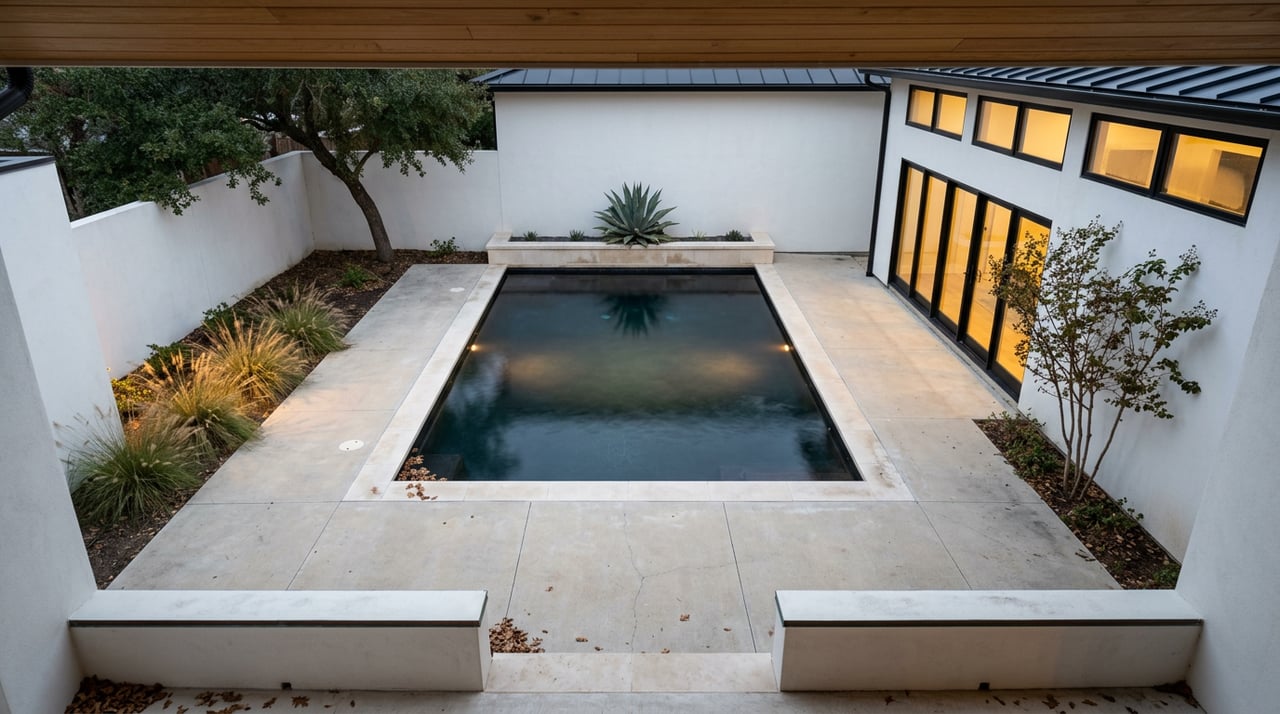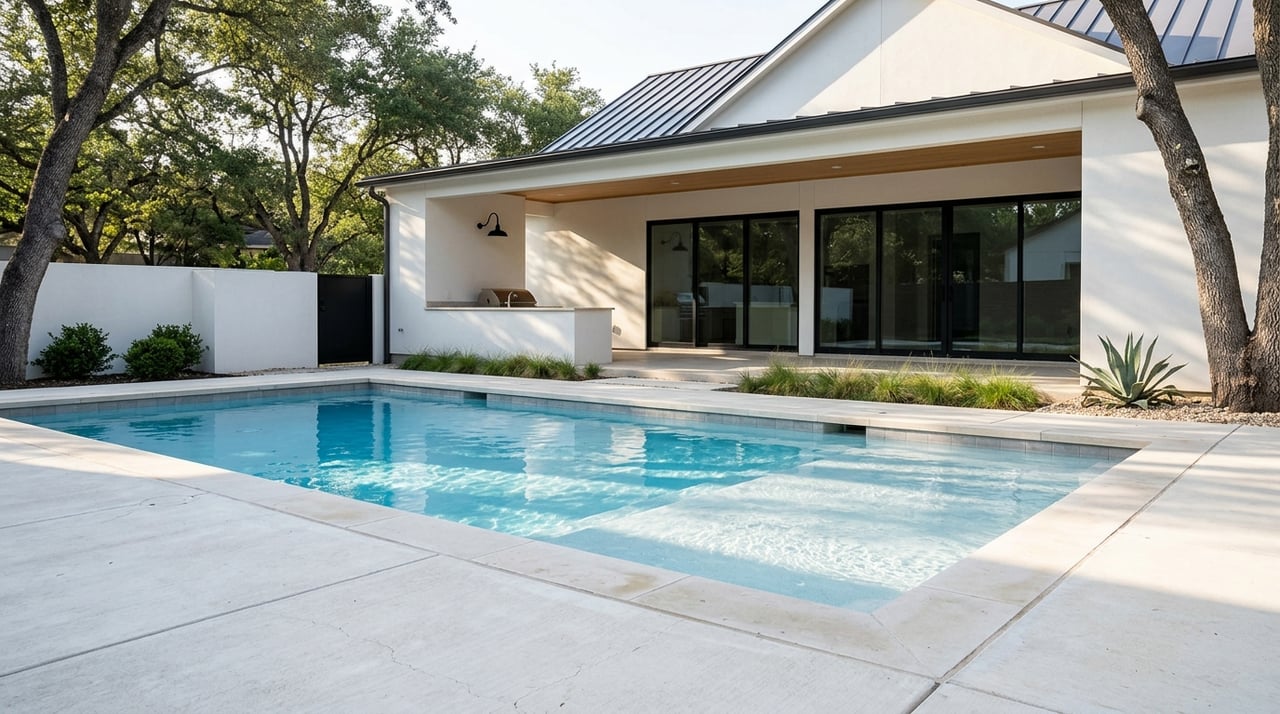
A pool can look like pure Westlake lifestyle, but buying a home with one takes more than falling in love with the view. If you are shopping in 78746, you are likely weighing sunny afternoons, entertaining space, and resale appeal against maintenance, safety, and permit questions. The good news is that with the right due diligence, you can enjoy the upside and avoid costly surprises. Let’s dive in.
Why pools matter in Westlake
Pool homes are common in the broader Austin market, and that matters when you shop in Westlake. Realtor.com reported that 51.9% of listings in the Austin-Round Rock-San Marcos metro had a pool in 2025, making it one of the highest-pool major metros in the country.
That does not mean every pool adds value in the same way. Nationally, homes with pools carried a typical price premium in 2025, but Realtor.com also noted that these homes were often larger and priced higher per square foot, so some of that premium reflects the home itself, not just the pool. In practical terms, a well-kept pool can support marketability in Westlake, but it is not a guaranteed dollar-for-dollar return.
Verify the property’s jurisdiction first
One of the biggest mistakes buyers make in 78746 is assuming every property follows the same rules. In reality, homes in this ZIP code can fall under different local jurisdictions, and pool requirements can change depending on where the property sits.
That matters if you plan to update the pool, replace fencing, add equipment, or do any exterior work after closing. Before you make assumptions, confirm whether the home is in West Lake Hills, Rollingwood, or the City of Austin and ask what rules apply to the existing pool and any future changes.
West Lake Hills pool rules
West Lake Hills requires a separate swimming pool permit and separate fees. Its checklist may call for items such as:
- A survey or site plan
- A drainage plan
- Erosion control details
- Electrical and plumbing information
- A barrier plan
- Lighting details
- Proof of liability insurance
- Contractor registration for larger projects
If a seller has made changes over time, it is smart to ask whether that work was properly permitted.
Rollingwood pool rules
Rollingwood handles residential pool and spa applications through MGO. Its checklist calls for documents that can include:
- A recorded plat
- A topographic survey
- Drainage documents
- Tree-protection documents
- Compliance with the International Swimming Pool and Spa Code
- Compliance with the National Electric Code
Rollingwood also posts a residential addition fee with a pool of $600 plus an area multiplier. If you are buying with future renovations in mind, that is worth understanding early.
Austin pool barrier rules
In Austin, private pools and spas do not need an operating permit, even though public and semi-public aquatic facilities do. Austin also treats pool barriers specially under its fence rules.
This can become especially important if fencing was recently replaced or altered. Austin notes that if more than 50% of an existing fence is replaced, the entire fence must meet safe-fencing code requirements.
What a Texas home inspection covers
A general Texas home inspection can tell you a lot about a pool, but it does not answer every question. Under TREC Standards of Practice, a licensed inspector should report on visible items such as the pool’s type of construction, safety barriers, GFCI failures, leaks in above-ground pipes or equipment, surfaces, tile, coping, decks, steps, handrails, drains, skimmers, valves, filters, pumps, motors, controls, lighting, and the pool heater.
That is useful information, especially when you are comparing properties or reviewing repair needs during the option period. It can help you understand the visible condition of major systems and whether obvious safety or equipment issues need attention.
What a general inspection may miss
TREC also makes clear that inspectors are not required to do everything a buyer might hope for. They do not have to disassemble filters, operate valves, excavate hidden components, fill the pool, inspect winterized systems, determine sub-surface leaks, or evaluate the effectiveness of entrapment covers.
That means a clean general inspection does not always rule out deeper pool issues. If the seller disclosure, visible condition, or inspection notes point to leaks, shell damage, deck movement, or equipment problems, a dedicated pool specialist is often a smart next step.
Safety features to check before you buy
Pool safety is about more than checking a box. It is a core part of ownership, and buyers should treat barriers and alarms with the same seriousness as pumps and plaster.
The CPSC recommends layers of protection. That includes a fence with self-closing, self-latching gates that completely surround the pool. If the house forms one side of the barrier, door alarms or a power safety cover are recommended.
You should also confirm that gates latch properly and that any door protections are working as intended. If fencing has been changed recently, especially in Austin, ask whether the work triggered current safe-fencing requirements.
Simple safety questions to ask
Before closing, consider asking:
- Does the pool have a complete barrier?
- Are gates self-closing and self-latching?
- Does the house form one side of the enclosure?
- If so, are door alarms or a power safety cover in place?
- Has any fence work been done recently?
- Were those changes made to current local code?
CPSC also recommends keeping rescue equipment and a phone near the pool and learning CPR. Those are ownership steps, but they are worth keeping in mind before you buy.
Budget for the real cost of ownership
A beautiful pool is not a low-maintenance feature. Ongoing costs can be meaningful, even when the pool is in good shape.
Water care is one of the basics. The CDC says residential pool owners should regularly test chlorine and pH, keeping pH between 7.0 and 7.8 and chlorine at at least 1 ppm in pools, with testing at least twice per day and more often during heavy use.
Energy use adds up
Pool equipment can also affect your monthly budget. The U.S. Department of Energy says a pool pump may be the home’s second largest energy user and can consume up to a few thousand kilowatt-hours per year, costing as much as $270 annually.
DOE also notes that smaller or variable-speed pumps can reduce energy use. If the home you are considering has an older pump, it is worth asking about age, efficiency, and replacement history.
Heating can change the math fast
If the pool is heated, operating costs can rise quickly. DOE says each degree increase in pool temperature can add 10% to 30% more energy cost.
That does not mean a heated pool is a bad idea. It just means you should go in with clear expectations, especially if you plan to use the pool outside peak summer months.
Do not overlook insurance questions
Insurance is another area where buyers should be proactive. The Texas Department of Insurance says many homeowners policies provide minimal or no liability coverage for swimming pools.
TDI also notes that some insurers may not renew coverage if the pool is not properly maintained. In addition, slides or diving boards may affect liability coverage, and many insurers and city ordinances require a fence and locking gate.
Before you close, review the current policy setup if possible and ask your insurer direct questions about:
- Liability limits for a home with a pool
- Any exclusions tied to pool features
- Whether slides or diving boards affect coverage
- Maintenance expectations for renewal
- Barrier or gate requirements
How to think about resale value
In Westlake, a pool often fits buyer expectations, especially because pools are so common in the broader Austin market. That can help with marketability when the pool is well maintained, appropriately permitted, and consistent with the home’s overall quality.
Still, resale value is not just about having a pool. Buyers tend to look closely at condition, equipment age, safety features, and whether the pool feels like a seamless part of the property rather than a future project.
This is where a construction-literate perspective helps. A newer pump, sound decking, clear maintenance records, and code-compliant barriers often make a better impression than flashy extras with deferred maintenance.
A smart Westlake pool-home checklist
If you are seriously considering a pool home in 78746, use this checklist as a starting point:
- Verify the exact city jurisdiction for the property
- Ask whether any pool or fence work required permits or plan review
- Request the age of the shell, surface finish, pump, heater, and automation equipment
- Ask for records of resurfacing, major repairs, or equipment replacement
- Confirm barrier, gate, and door protections are working properly
- Review homeowner’s insurance implications before closing
- Estimate likely operating costs for electricity, chemicals, cleaning, and heating
- Consider a dedicated pool inspection if the general inspection raises concerns
Why local guidance makes a difference
Buying a Westlake home with a pool is partly a lifestyle decision and partly a technical one. The pool may be a major reason you love the property, but it also brings local rule questions, maintenance realities, and inspection details that deserve close attention.
When you know what to verify and what to ask, you can buy with more confidence. If you want help evaluating a Westlake pool home, from condition questions to jurisdiction-specific details, reach out to Jenny Walker for thoughtful, local guidance.
FAQs
What should you check before buying a pool home in Westlake?
- Verify the property’s jurisdiction, review permit history if available, inspect safety barriers and equipment, estimate operating costs, and consider a dedicated pool inspection if any concerns show up.
Does a pool always add value to a Westlake home?
- Not always. A pool can support marketability in a high-pool market like Austin, but value depends on the home’s size, location, condition, maintenance, and how well the pool fits buyer expectations.
Can a Texas home inspector fully evaluate a swimming pool?
- No. A Texas inspector can report on many visible pool components, but TREC does not require inspectors to determine sub-surface leaks, excavate hidden components, or disassemble certain systems.
Do pool rules vary within 78746?
- Yes. A 78746 property may fall under West Lake Hills, Rollingwood, or Austin rules, and each jurisdiction can have different permit, fee, and barrier requirements.
How does a pool affect homeowners insurance in Texas?
- The Texas Department of Insurance says pool liability coverage may be limited or excluded under some policies, and features like slides or diving boards may affect coverage or renewal.
What pool safety features matter most for a home purchase?
- Key features include a complete barrier, self-closing and self-latching gates, and added protections such as door alarms or a power safety cover if the house forms one side of the enclosure.