Lake Austin vs. Lake Travis vs. Lake LBJ: Which Texas Lake Is Right for You?
Three lakes. Three completely different experiences. Here is how to tell them apart and what each one actually offers.
If you are new to Austin or considering a move to West Austin and the Hill Country, you will hear these three names come up constantly: Lake Austin, Lake Travis, and Lake LBJ. People talk about them as if they were interchangeable, but they are not. They sit on the same river system, but they feel nothing alike and serve very different purposes depending on what you are looking for.
Here is a clear-eyed comparison of all three.
The Quick Version
Lake Austin is the city's lake, convenient, calm, residential, and close to everything. Lake Travis is the big lake, wide open water, high energy, limestone cliffs, and the place most people picture when they think of Texas lake life. Lake LBJ is the Hill Country lake, quieter, more refined, and the one serious waterfront property buyers keep coming back to.
Each one earns its reputation. The question is which one fits your life.
Lake Austin
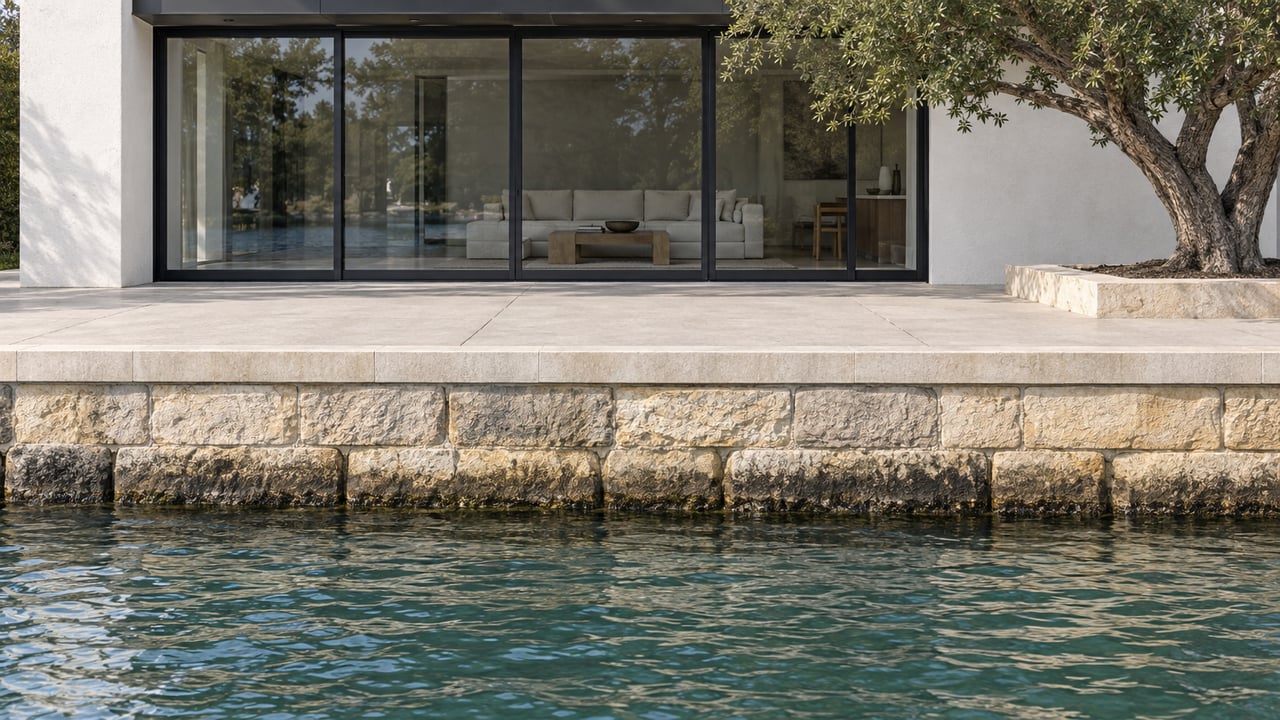
Lake Austin runs about 21 miles through the western edge of Austin, fed by releases from Lake Travis upstream and ending at Tom Miller Dam where it becomes Lady Bird Lake. It sits entirely inside the city, which is both its biggest advantage and its defining characteristic.
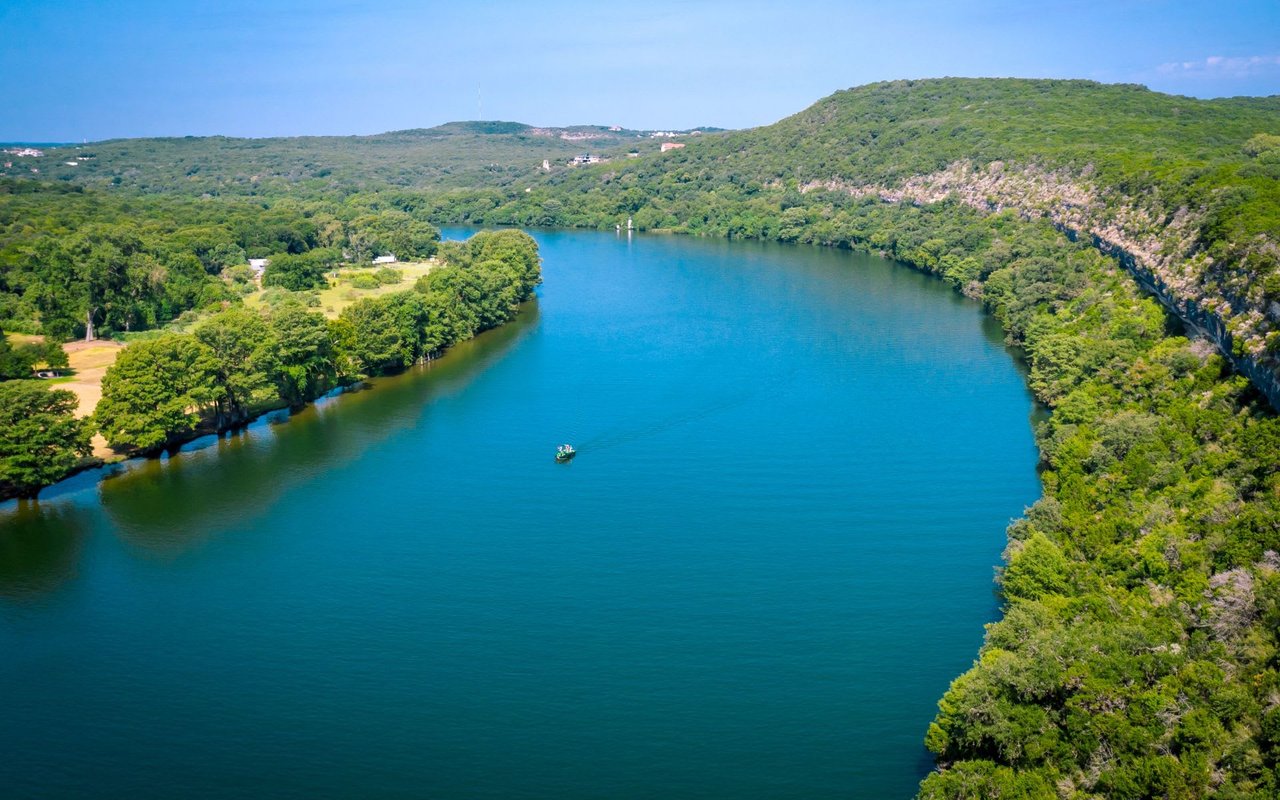
The lake is narrow and calm, much more river-like than the wide-open feel of Travis. Speed limits are enforced, wakes are managed, and the overall vibe is low-key and residential. You are not going to find limestone cliffs or expansive open water here. What you will find is clear, consistently cool water, tree-lined bluffs, a handful of waterfront restaurants accessible by boat, and a pace that feels like an extension of the neighborhood rather than a destination.
For residents of West Austin and Westlake, Lake Austin is the everyday lake. You are not driving 30 minutes to get there, it is part of the fabric of where you live. That proximity changes how a lake functions. Instead of planning a lake day, you go on a Tuesday afternoon.
Waterfront property on Lake Austin commands some of the highest prices of any Texas lake, driven by limited inventory, strict zoning, and the premium of being inside the city. The trade-off for that price is real: almost all of the shoreline is privately owned, public access is limited to a handful of launch points, and you are not getting the open-water freedom of Travis.
Best for: West Austin residents, families wanting calm water close to home, buyers seeking prestige and proximity over scale
Lake Travis
Lake Travis is the big lake. At nearly 64 miles long with over 270 miles of shoreline, it is a completely different scale from Lake Austin. The limestone cliffs, open water, and dramatic Hill Country views are what most people imagine when they picture Texas lake life and Lake Travis delivers on that image.
The energy here is higher. Devil's Cove draws party barges and tied-up boats on weekends. Hippie Hollow is one of the few public clothing-optional parks in the country. Cliff jumping, tubing, boat-in restaurants, live music accessible only by water, Lake Travis is built for a certain kind of fun that Lake Austin simply cannot accommodate.
The practical reality is that Lake Travis is about 30 minutes from downtown Austin, which means it functions as a destination rather than a day-to-day amenity. For people who live in Lakeway, Bee Cave, or along the RR 620 corridor, it is closer but it is still a drive.
The other reality worth knowing is water level. Lake Travis is a flood-control reservoir, which means its levels fluctuate significantly with drought and rainfall. In severe drought years the lake has dropped dramatically, exposing shoreline and stranding docks. That variability is worth factoring in for anyone evaluating waterfront property on Travis specifically, it affects both usability and long-term value in ways that do not apply to the other two lakes.
Best for: Weekend lake days, high-energy water activities, people living along the RR 620 corridor, visitors looking for the full Texas lake experience
Lake LBJ
Lake LBJ sits about 45 miles northwest of Austin near Marble Falls, Horseshoe Bay, and Kingsland. It is the one most people outside the Texas lake world have not heard of and the one that serious waterfront buyers tend to land on once they do their homework.
The defining characteristic of Lake LBJ is that it is a true constant-level lake. Unlike Lake Travis, which fluctuates significantly with drought and flood cycles, Lake LBJ maintains a stable water level year-round. That stability matters enormously for waterfront property, your dock stays in the water, your shoreline looks the same in August as it does in March, and the usability of your property does not depend on rainfall patterns.
The lake covers over 6,500 acres with 21 miles of shoreline, and the communities along it range from the upscale resort lifestyle of Horseshoe Bay to the more laid-back, countryside feel of Kingsland and Granite Shoals. The pace is slower than Lake Austin and significantly quieter than Lake Travis on a summer weekend, which is exactly the point for the buyers who choose it.
For people drawn to the Hill Country aesthetic, rolling live oak hills, big sky, quiet water, Lake LBJ delivers that experience more reliably than either of the other two options. The trade-off is the commute. At 45 miles from Austin, it functions as a weekend lake or second-home destination for most buyers, not an everyday amenity.
Best for: Waterfront property buyers prioritizing stability, second-home buyers, Hill Country lifestyle seekers, anyone who has watched Lake Travis drought cycles and wants a different answer
Side by Side
|
Lake Austin |
Lake Travis |
Lake LBJ |
|
|
Distance from Austin |
Inside city |
~30 min |
~45 min |
|
Size |
21 miles, narrow |
64 miles, expansive |
21 miles, 6,500 acres |
|
Water level |
Mostly stable |
Fluctuates with drought |
True constant level |
|
Energy/vibe |
Calm, residential |
High energy, social |
Quiet, Hill Country |
|
Waterfront prices |
Highest |
Mid-to-high |
Mid-to-high |
|
Best use |
Daily access, city living |
Weekend recreation |
Second homes, stability |
What This Means for Buyers
If you are buying in West Austin and want water access as part of daily life, Lake Austin is your lake. The price reflects that, but the convenience is real and it is the kind of amenity that makes a neighborhood what it is.
If you are looking for a second property in the Texas Hill Country and want to make a smart long-term investment in waterfront real estate, Lake LBJ deserves a serious look, particularly for buyers who have watched Lake Travis weather drought cycles.
And if you are evaluating the broader Austin market and trying to understand how proximity to these lakes affects neighborhood pricing and lifestyle, that is exactly the kind of local context worth a conversation.
Jenny Walker and Alisa Wells of the Walker Wells Group can help you think through how water access factors into your specific search, whether you are buying in Westlake, along the Lake Austin corridor, or further out into the Hill Country.
FAQs
What is the difference between Lake Austin and Lake Travis?
- Lake Austin is a narrow, calm lake inside Austin city limits, best known for its residential character, waterfront dining, and proximity to West Austin neighborhoods. Lake Travis is a much larger lake about 30 minutes from downtown, known for open water, limestone cliffs, and high-energy recreation but its water level fluctuates significantly with drought.
Is Lake LBJ better than Lake Travis for waterfront property?
- Many buyers prefer Lake LBJ for waterfront property because it is a true constant-level lake, meaning water levels stay stable year-round regardless of drought. Lake Travis offers more open water and is closer to Austin, but its fluctuating water levels can affect dock usability and property values.
How far is Lake LBJ from Austin?
- Lake LBJ is approximately 45 miles northwest of Austin, near Marble Falls and Horseshoe Bay. Most buyers treat it as a second-home or weekend destination rather than a daily commute lake.
Which Austin lake is best for families?
- It depends on what you want. Lake Austin is best for families who want calm, close-to-home water access. Lake Travis offers more space and variety of activities for older kids and larger groups. Lake LBJ is ideal for families who want a quieter Hill Country setting with stable water year-round.
Can you swim in Lake Austin?
- Yes. Lake Austin has clean, clear water and is safe for swimming. The water runs consistently cool because it is fed by releases from the bottom of Lake Travis.