If you live on Lake Austin, you've probably already heard that the lake is dropping ten feet this October. The drawdown has prompted questions about how much it will do to control hydrilla.
The City of Austin's Watershed Protection department has said, in a 2025 memo and again in stakeholder meetings this year, that lowering the lake probably won't beat back the hydrilla at all. In some past drawdowns, the exposed vegetation came back stronger because it had less competition from other plants once it dried out. The fall drawdown also provides a maintenance window for shoreline work, while any effect on hydrilla remains uncertain.
The Calendar Worth Putting on Your Fridge
This is the first drawdown on Lake Austin since 2017, and only the second one since 2011, so most current owners have never lived through one. Here's the sequence, straight from the city and LCRA's own release:
| Date | What happens |
|---|---|
| Aug. 20, 2026 | LCRA approves the drawdown at the City of Austin's request |
| Sept. 9, 2026 | Public open house, 6 to 8 p.m., Permitting and Development Center, 6310 Wilhelmina Delco Drive, Room 1407 |
| Oct. 12, 2026 | Lake begins dropping, at no more than about a foot a day |
| Late Oct. to early Nov. | Lake reaches its target range of 481.8 to 482.8 feet above mean sea level, roughly ten feet below the normal 491.8 to 492.8 foot range |
| Nov. 24, 2026 | LCRA begins refilling, releasing water from Lake Travis at up to two feet a day |
| Nov. 30, 2026 | Lake expected back in its normal operating range |
LCRA has flagged that this timeline can move. A flood event or a strain on grid power could shorten or cancel the whole plan, since the same dams that manage lake levels also generate hydroelectric power the state leans on during weather extremes. That's actually why this is happening in the fall at all. Since Winter Storm Uri in 2021, LCRA no longer schedules winter drawdowns on the Highland Lakes, because the turbines need to stay available through cold snaps. Fall is what's left on the calendar.
Worth knowing if you're on the Lake Austin shoreline: a ten-foot drawdown on this stretch of the lake works out to roughly 13,000 acre-feet of water, and refilling it draws that volume down from Lake Travis, which is expected to drop about nine inches to cover it. Your dock repair is a rounding error on Lake Travis's water budget, but it isn't a rounding error on the decision to do this only once every several years.
The Hydrilla Numbers Behind the Skepticism
The doubt isn't coming from nowhere. Texas Parks and Wildlife surveyed the lake's vegetation in June 2026 and found 575 acres of hydrilla and 75 acres of Eurasian watermilfoil. Hydrilla had actually ticked down slightly from 592 acres in February, while the milfoil grew from 58 acres. Add it up and the total invasive footprint held roughly steady over that stretch, which is part of why city staff aren't promising a cleaner lake come December.
This isn't the first time Austin has tried to manage hydrilla here. The city has been stocking sterile grass carp, fish that graze selectively on the plant, since the early 2000s, and added around 5,000 more since late July 2026 with plans for further stocking this fall. That program runs independently of the drawdown and isn't expected to change because of it.
For shoreline owners, the opportunity is real, but it comes with permits, deadlines, and a short window to act.
The request for a drawdown first came from shoreline property owners and the Friends of Lake Austin advocacy group back in October 2025, pushing for winter timing specifically to stress the hydrilla with cold air. Once winter was off the table for grid reasons, the ask shifted to this fall, and nearly a year of Lake Austin Stakeholder Group meetings later, LCRA signed off on the version we have now.
What an Exposed Lakebed Actually Lets You Do
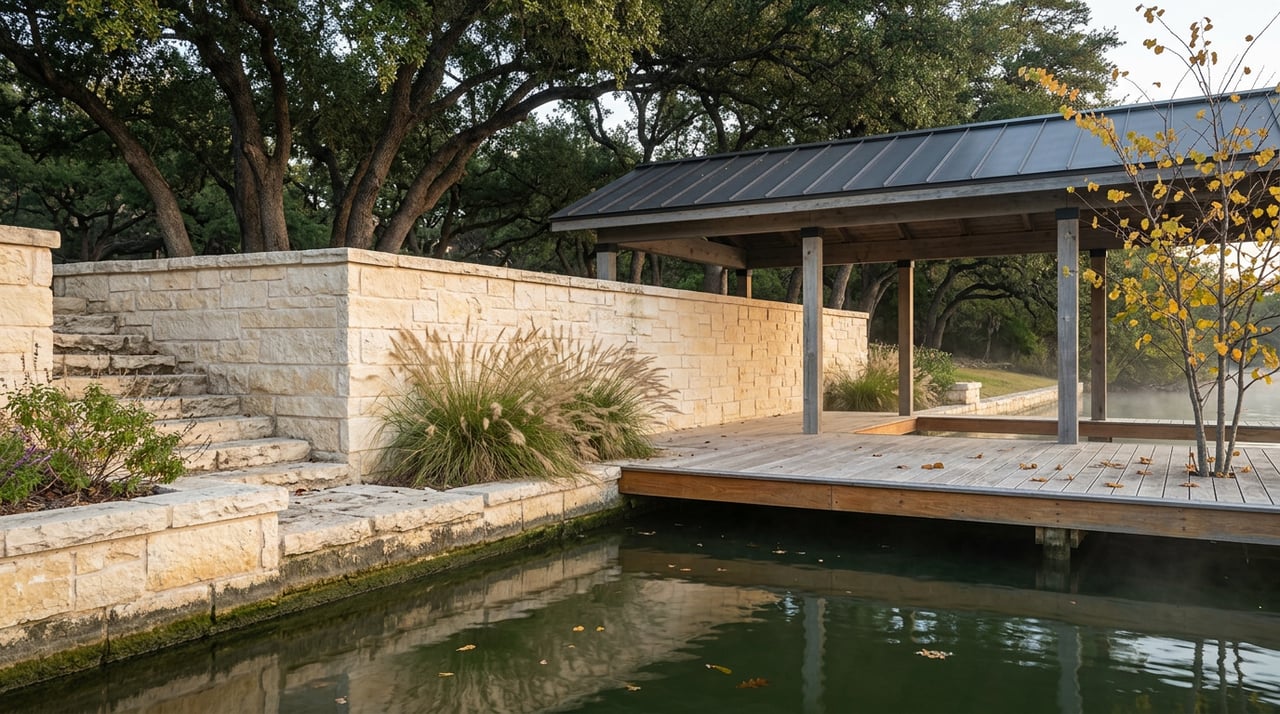
For homeowners with shoreline structures, the real value of October and November isn't ecological, it's access. Here's what the drawdown period changes for permitted work:
- The city is actively encouraging trash and debris removal from the exposed lakebed. Woody debris is a different story, since it provides habitat for fish and other lake life, so the guidance is to leave it in place where you can.
- Austin Development Services has been building a dedicated Site Plan Exemption pathway specifically for minor dock and bulkhead work during this drawdown, meant to move faster than a standard site plan review. As of the city's late August announcement, that application was still being finalized, with details expected at AustinTexas.gov/Boat-Docks in the weeks ahead.
If you're planning shoreline work this fall, the September 9 open house is where the city plans to walk through exactly which of these paths applies to your project, and it's worth going in person rather than waiting for the paperwork to post online.
What Changes If You Don't Own a Dock
Not everyone on this lake owns waterfront property, and the drawdown still touches daily routines for people who use Lake Austin without living on it. Public boat ramps will be closed for the full stretch, and swimming will be prohibited at Emma Long Metropolitan Park throughout the drawdown. If your weekend routine involves trailering a boat in or taking the kids to the park's swim area, October and November will look different this year. Anyone planning around our Lake Austin boating season should treat this fall as an off year for public access points, even though private docks and slips can generally still be used depending on individual repair work happening nearby.
Austin City Council members Marc Duchen and Paige Ellis raised a related question when staff briefed them on the plan: whether the timing gives property owners enough runway to get permits sorted, and whether it collides with a season that local marinas and waterfront businesses count on. That's still an open question as the city works through logistics, but it's the kind of detail that tells you this wasn't decided casually. Someone on the council is tracking whether this helps or hurts the businesses that depend on lake traffic, not just the homeowners asking for repairs.
Why You Shouldn't Expect This Again Next Year
Drawdowns used to be more routine on Lake Austin, happening with some regularity in the early 2000s. Since 2011, this is only the second one, and the first since 2017. Winter is off the table for grid reasons, summer conflicts with peak boating season, and spring risks harming fish that spawn in shallow water when the lakebed floods or dries unpredictably. That leaves a narrow fall window, and the city isn't promising it'll come around on any set schedule after this.
If there's shoreline work you've been putting off, a bulkhead that's been crumbling for a few seasons, a dock that needs more than a patch job, this is the access point, not next spring and not next year by default. The Sept. 9 open house is the place to find out which permitting path fits your specific repair before the lake starts dropping on October 12.
Lake Austin rewards the people who pay attention to details like this one, long before any of it shows up in a listing description. If you're weighing a shoreline project, wondering what a repaired dock or a fixed bulkhead might mean for your property down the line, or just want a second set of eyes that knows this lake's permitting quirks, Jenny Walker at Lux Austin Real Estate has been tracking Westlake and Lake Austin long enough to help you sort the real deadline from the noise. Grab our Westlake Guide or request a home valuation any time you're curious what this stretch of shoreline is actually worth once the water comes back up.
This article is general information, not legal, tax or financial advice. Consult a qualified professional about your situation.